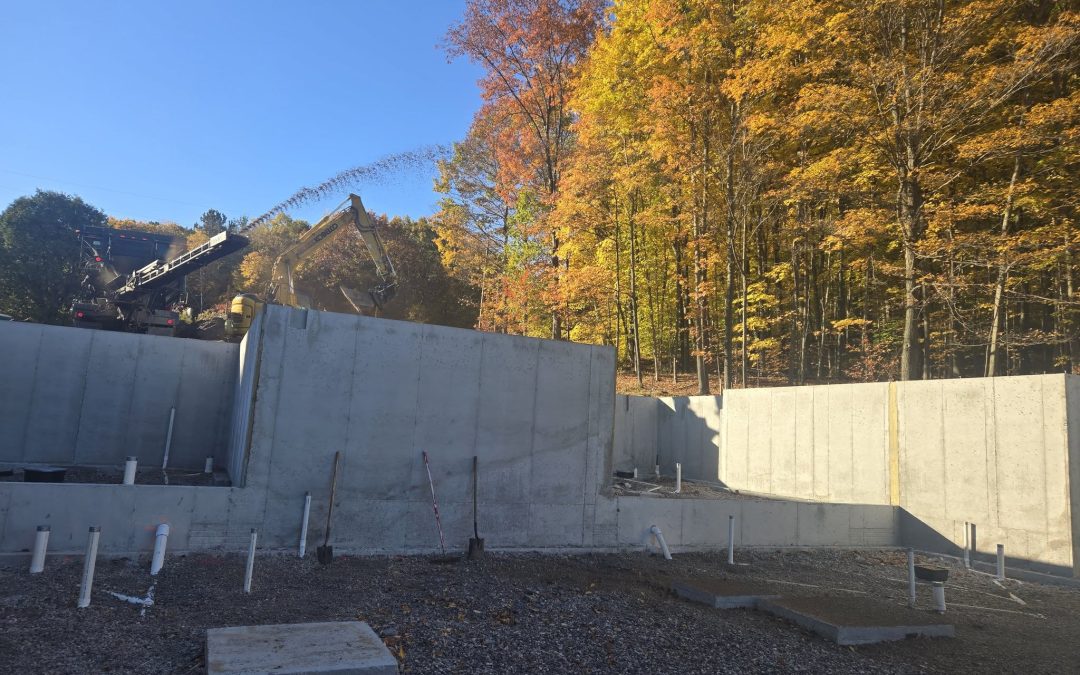
This is a loaded question with many variables that can significantly impact the final price. I’ll share the averages at the end so you can jump ahead if you just want the numbers—but I strongly recommend reading through the full explanation first.
Understanding the factors will give you a much clearer picture of what drives the cost on your specific project.
1. Location
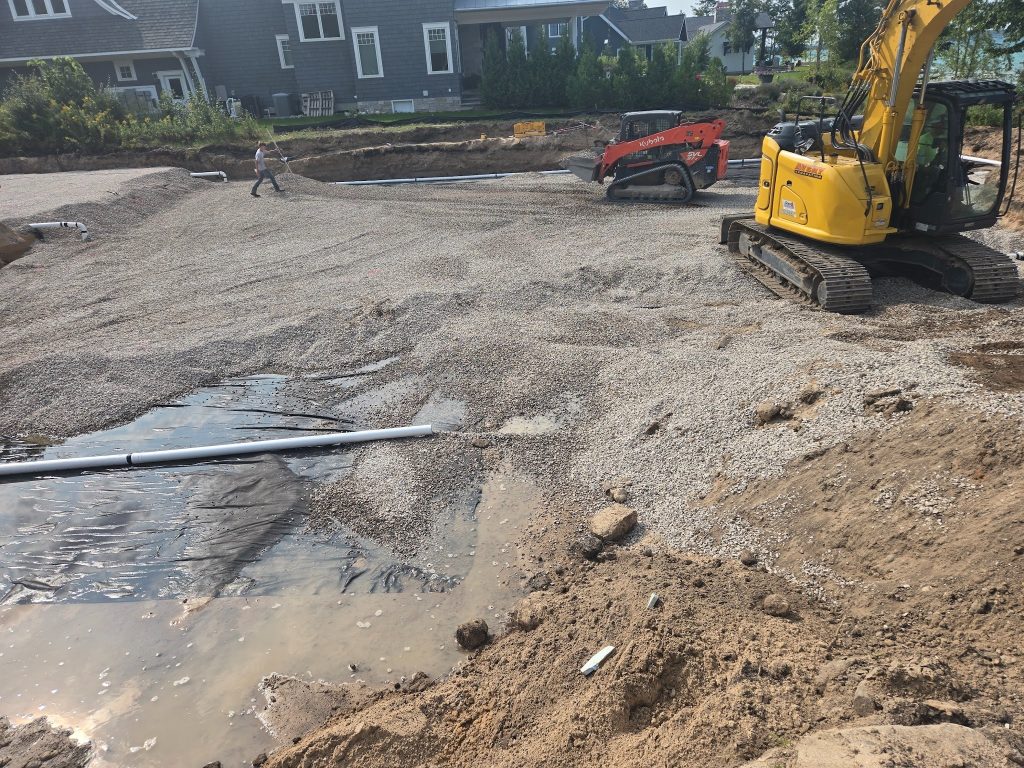
Where on your property are you planning to build? Is the home site right off the road (within 30–100 feet), or is it a mile back in the center of the land? The longer the access, the higher the cost—not just for the driveway itself, but for getting equipment, materials, and crews in and out. While the driveway isn’t a direct line item in the basement/foundation dig, it heavily influences the overall excavation budget.
Depending on the home’s size and scale, you may need to account for 3–4 separate driveway-related phases: a temporary construction drive for the excavation and concrete teams; a touch-up and approach build after backfilling the foundation (to support framing); and a final prep and install for asphalt or concrete.
2. Size of the House
This is often the second—and usually largest—factor in basement dig pricing. A 1,200-square-foot foundation with a 4-foot crawl space will cost far less than a 6,000-square-foot home with an attached garage and full basement.
3. Trees
Are there trees that need removal before digging can begin? Are they large, mature hardwoods (16+ inches in diameter) or lighter, stringy species like pine or poplar? The quantity, size, and type of trees—and the associated stump removal—can add a substantial amount to the pricing.
4. Ground Conditions
Has a soil boring been done to identify soil types and groundwater depth? In Michigan, sand is the ideal soil for a new foundation: it drains well and doesn’t hold water, which minimizes frost heave and soil movement in winter. If the soil is heavy clay, full of large rocks, or anything other than sand, you’ll likely need to export the unsuitable material (or blend it onsite if space allows) and import clean fill sand. This can involve 2–3 days of exporting with dump trucks and another 2–3 days of importing—easily doubling or tripling the base cost of the foundation excavation.
5. Stone Base Under the Footing
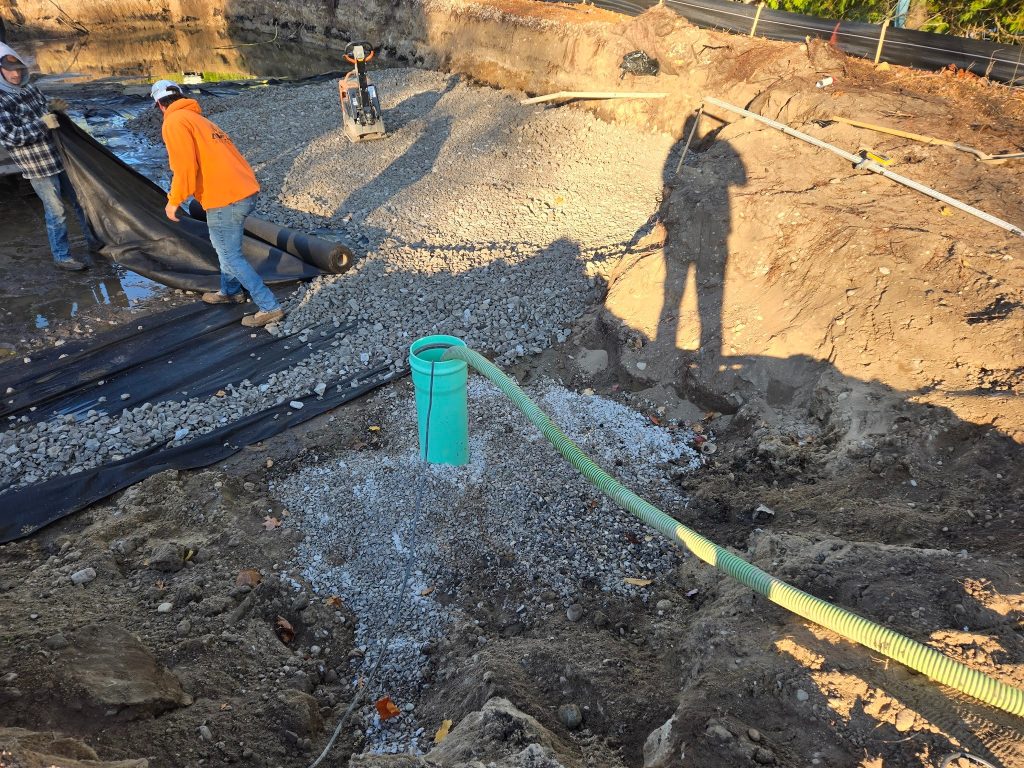
This is the single most important step, regardless of soil conditions or location. We install a 12-inch-thick pad of clean crushed stone (typically ¾- to 1-inch 6AA) beneath the footing. It serves as a drain field under the entire home and is the best defense against water intrusion into the basement or foundation.
In my experience, the only failures we’ve seen occur when the daylight pipe clogs or breaks. We also place 4-inch perforated drain tile pipe within the stone to create an exceptional drainage system. This step represents about 0.5% of the total home build cost and is your only chance to incorporate this level of protection before the foundation is poured.
We include it as standard in all our quotes because it provides unmatched long-term value. (Photo above from a recent Torch Lake project shows this system being installed.)
6. Dewatering
In many cases, dewatering is required to keep the excavation dry for safe work and proper foundation placement. The photo above illustrates a “Kelly Well” setup we use to manage water during the dig. Installing and operating it adds to the prep work and overall cost.
The bottom line: prepping and excavting basement foundation involves far more than just digging a hole. It’s the most critical phase of any home build. In early budgeting, homeowners and even some builders often prioritize premium visible elements—windows, countertops, finishes—while viewing the foundation as an “unnecessary” expense. But in recent years, as we’ve built stronger partnerships with custom home builders in our region, the stone underdrain system has become standard practice in most—if not all—quality builds.
Average Cost of Basement and Foundation Excavation Services
- Basic basement excavation: $8,000–$30,000.
- Full foundation dig with stone base (including stone base, potential soil export/import, dewatering, etc.): $30,000–$70,000+ depending on size, soil, access, and extras.
- Costs can easily climb higher with poor soil, large trees, remote sites, or extensive dewatering.
These are ballpark figures—your actual cost will depend on a site-specific quote after evaluating the variables above. If you’re planning a project, getting a soil test and professional assessment early is the best way to avoid surprises. Its valuable to have an engineer perform soil boring tests to confirm the soil conditions.
It’s also beneficial to have us dig a few test holes on site to physically see the soils and dig to the grade/elevation where the footings will likely be poured. The engineer will confirm that the soils below the foundation are suitable for a structure, and the test holes we perform will give us the exact information we need to properly quote a foundation or basement dig and prep.
This blog post was written by Kyle Riegle, owner of Avery Excavating