
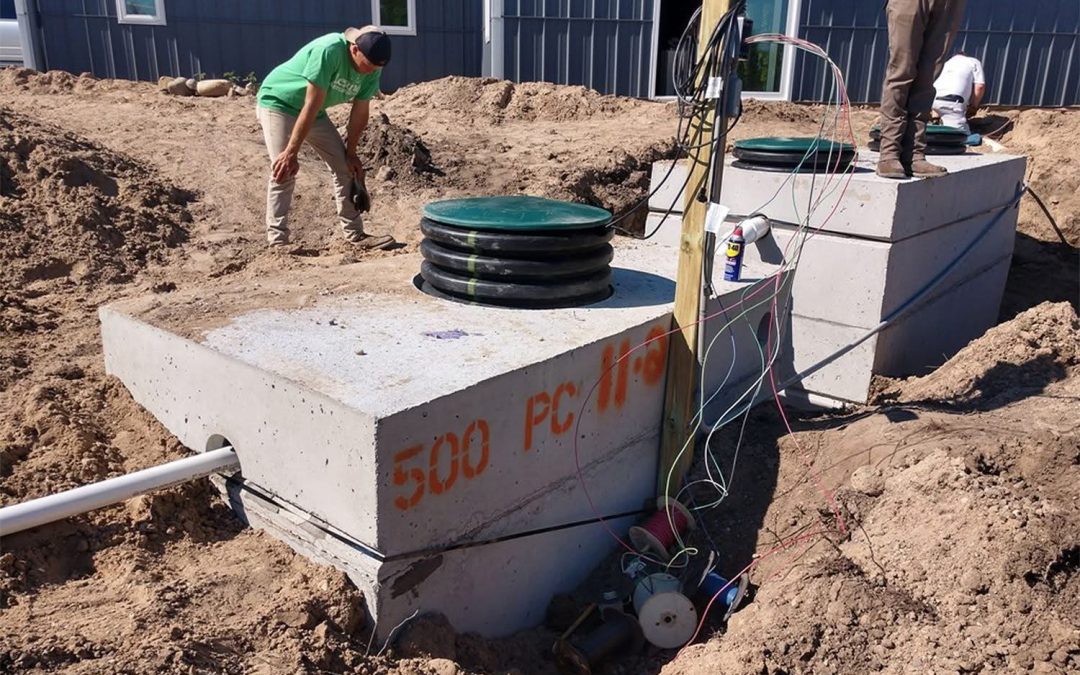
Your septic system is something you may not fully appreciate until it fails. Unfortunately, they typically fail at the most inconvenient times: a birthday party, Christmas, Thanksgiving, or in the middle of a super-cold winter. Either way, it’s not a fun experience.
I write and speak this from both sides of the equation—as a septic system replacement installer in Antrim, Kalkaska, Grand Traverse, Charlevoix, and Leelanau Counties, and as a homeowner. Ours failed in February 2025. It was cold. It was snowy, and I had spent the last three years really dialing in the grass in that area of our lawn. Like I said, always perfect timing.
Step 1: Get Your Tank Pumped
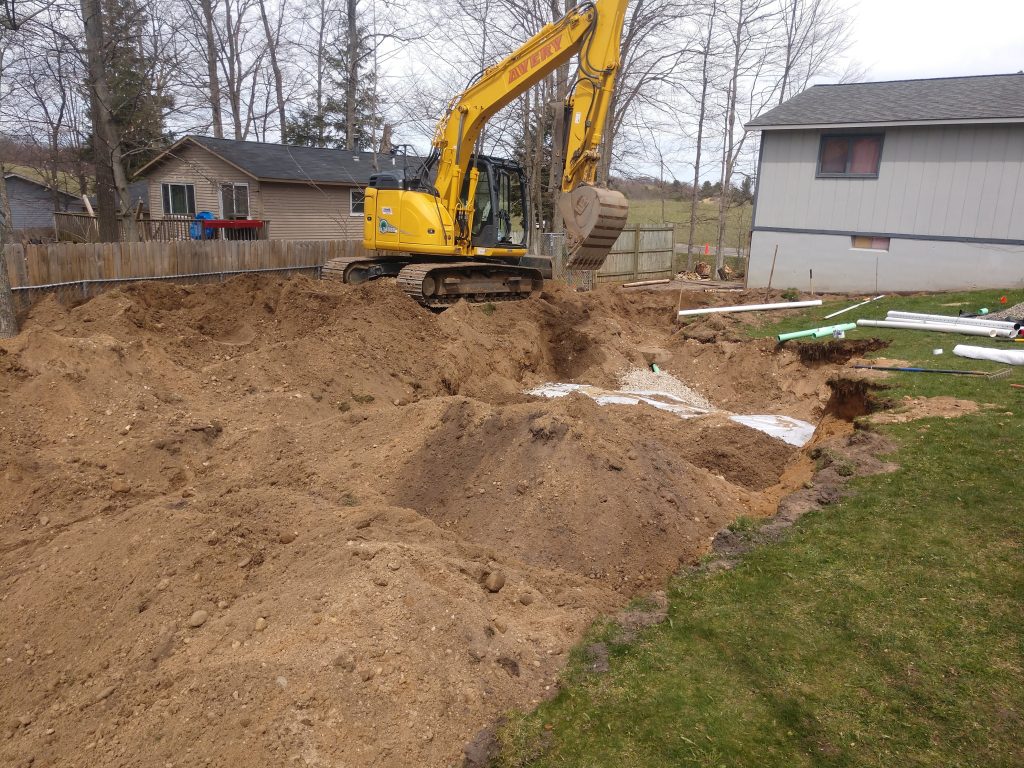
Call a local septic tank pumper. If your system is backed up, you’ll need to get your tank pumped to relieve the plumbing inside. Below are recommendations that may serve your area:
- Antrim County, Michigan (Elk Rapids, Rapid City, Kewadin, Mancelona, Alden, Williamsburg): https://www.gmosers.com/ & https://www.facebook.com/SavageSeptic/
- Kalkaska County, Michigan (Rapid City, Kewadin, Mancelona, Alden, Williamsburg): https://www.gmosers.com/ & https://www.facebook.com/SavageSeptic/
- Grand Traverse County (Traverse City, Kingsley, East Bay Township, Acme, Peninsula Township, and the general TC area): https://www.williamspumping.com/ & https://www.belangersseptic.com/
- Leelanau County (Bingham Township, Suttons Bay, Northport, Empire, etc.): https://www.williamspumping.com/ & https://www.belangersseptic.com/
Step 2: Get a Septic Permit
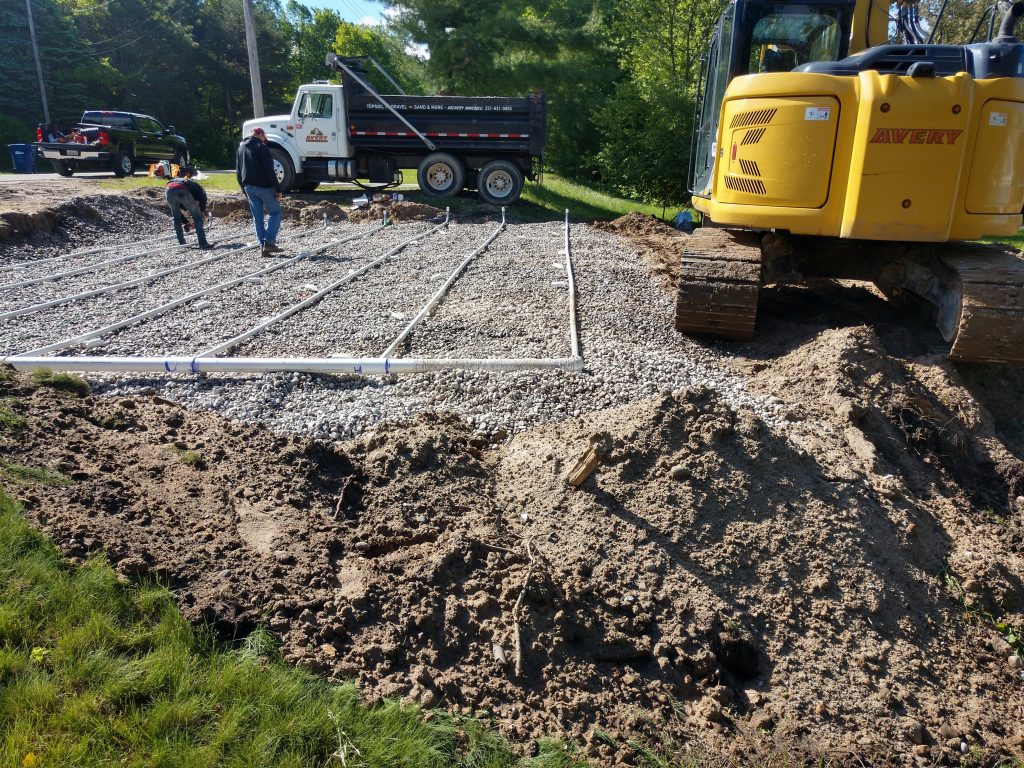
Call or go online to your county health department and apply for a septic permit. Make sure to let them know if it’s an emergency so they can expedite it.
We need the permit to provide an accurate quote for your system. The permit gives us the specs on sizing, location, tank(s), and overall design. Without it, we can only give a rough cost estimate—and even then, we (as septic tank installers) could be way off.
County resources:
- Antrim & Charlevoix Counties: https://nwhealth.org/sewage-systems/
- Grand Traverse County: https://www.gtcountymi.gov/822/On-Site-Septic-Systems
- Kalkaska County: https://www.dhd10.org/environmental-health/well-septic/residential/
- Leelanau & Benzie Counties: https://bldhd.org/on-site-sewage-program/
We need the actual septic permit. In some cases (e.g., when purchasing a home), you’ll have a soil inspection or septic evaluation from a third party. This information is helpful, but it is not the permit. Those reports (from third parties or health departments) only state whether the site is suitable for an on-site septic system.
If the site isn’t suitable for a standard on-site system, this typically means only holding tanks will be permitted, or an engineered system (e.g., ATS) will be required. That needs an engineer to design it. We recommend Performance Engineers—they’re the absolute best at wastewater system design in Northern Michigan. https://www.performanceeng.com/
Step 3: Get an Estimate from Avery Excavating
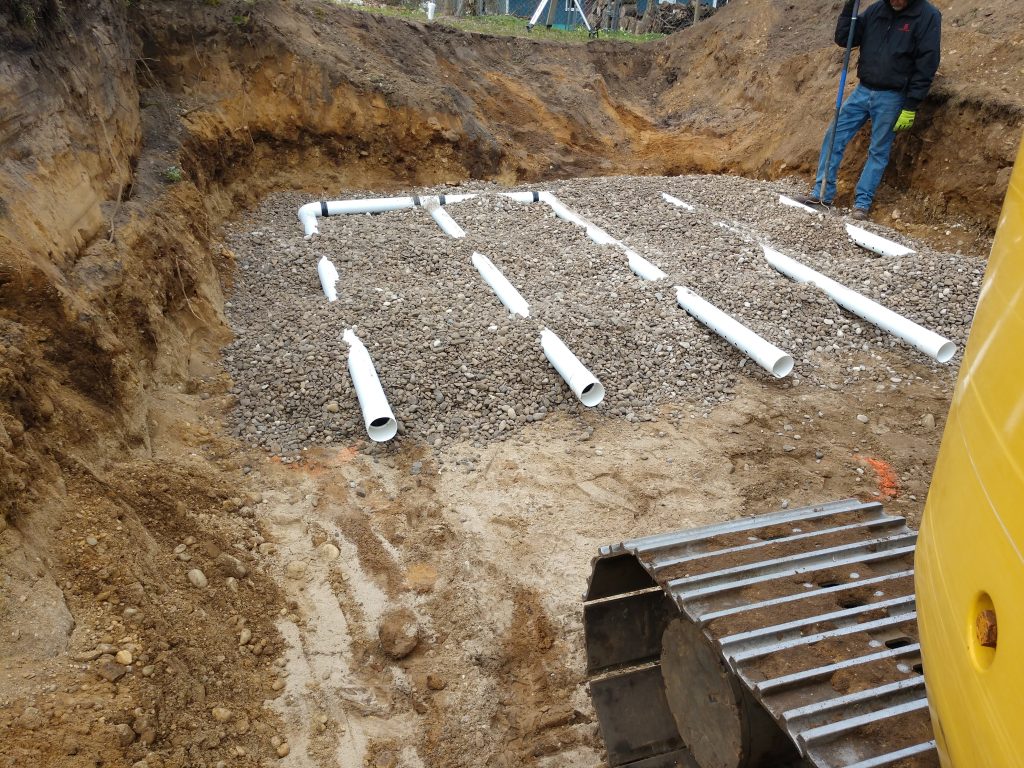
Once you have the permit, give us a call at 231-631-0855 and email it to us. One of our awesome estimators, Michael or Joe, will get the ball rolling.
- For non-emergency systems, it generally takes us 1–3 days to provide a detailed estimate.
- For emergency replacements, we’ll prioritize it and quote you within 24 hours.
Email the permit to: Michael@averyexcavating.com and JoeHardy@averyexcavating.com
Our estimates are detailed line by line and easy to understand. Most systems require a $250 deposit to secure a spot on our schedule, with the final balance due upon project completion.
Step 4: Installation!
Installation for an average system takes about 2 days. Some small systems finish in 1 day, while others can take 5–10 days.
We’ll install the system, coordinate inspections with the health department and/or engineers as needed, and ensure everything is built to specification.
The yard/area will get completely dug up. Sometimes trees, decks, sidewalks, or other obstacles need removal—we handle all of it.
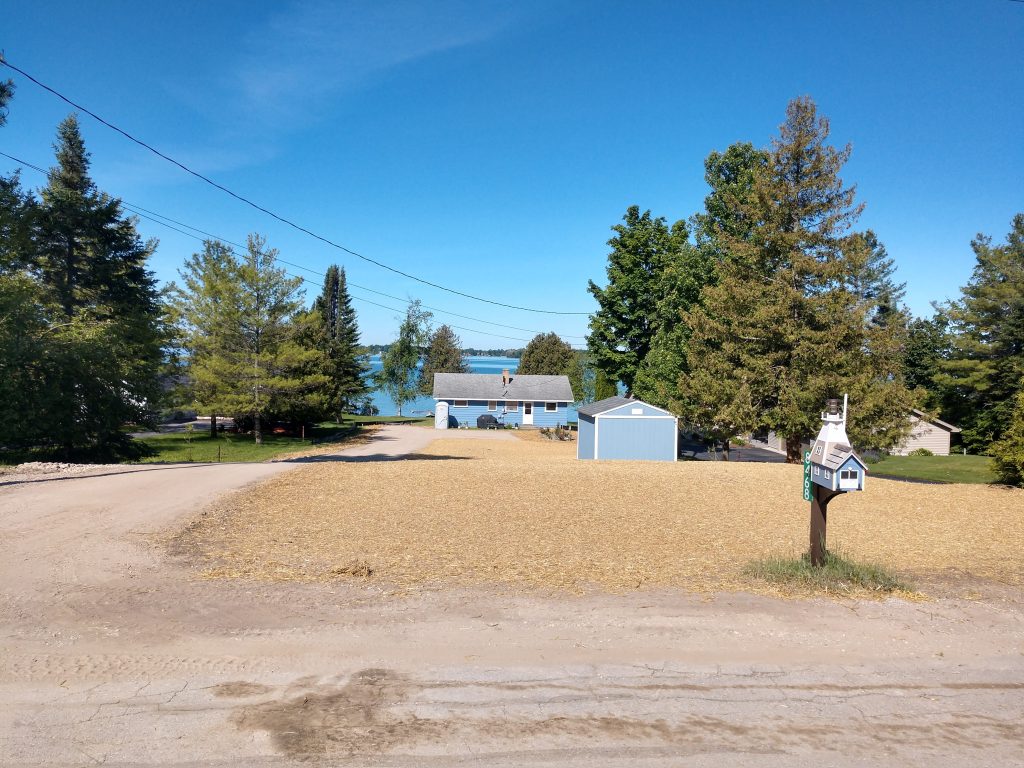
We also offer site finishing: screened topsoil to create a golf-course-like yard, grass seed, straw mulch, and cleanup (sweeping your driveway and road). We’ll leave the site as good as—or better than—when we arrived.
How Much Does a New Septic System Cost?
- Average gravity-based system (good access, good soil per health department): $10,000–$18,000
- Systems requiring a pump: $16,000–$45,000
- Engineered systems: $30,000 and up (depending on size and scope)
These are approximate ranges based on current conditions.
Avery Excavating is proud to be a registered partner of MichiganSaves.org. The Michigan Saves Septic Replacement Loan Program (SRLP), created in partnership with the Michigan Department of Environment, Great Lakes, and Energy (EGLE), provides low-interest financing to Michigan homeowners for replacing failing or near-failing septic systems (and connecting to municipal sewer when available). For 2026, they offer financing up to $50,000 for replacement systems (with options up to higher amounts in some cases). Visit their site to register and get started! https://michigansaves.org/septic/
Notes: It’s critical that we have the permit to quote your project accurately.
There’s also a step when purchasing property called a “perc test” (percolation test). The health department inspects the site and soil to determine if it’s suitable for a septic system. This does not get you a permit—it only confirms or denies the site’s ability to support an on-site system. These are common in real estate transactions for buyer assurance.
For an additional $50–$150, you can often upgrade to a full septic permit through the health department during that process. Permits are generally good for 2 years, with a ~$50 fee to renew if they expire.
Thanks for reading! We look forward to working with you to install a new or replacement septic system.